Beuys in food
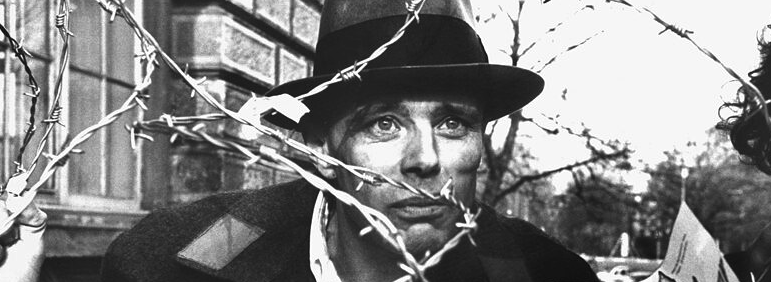
Joseph Beuys’ idea of Social Sculpture is not an art concept in the narrow sense, but a radical blueprint for society. What Beuys meant by this is: society itself is malleable like a work of art, and every human being is an artist, because each person participates in shaping this form through thinking, acting, and creating. For Beuys, creativity is not an aesthetic ornament, but a productive, formative force in the social, economic, and political sphere.
If one applies this to the value chain of food, it quickly becomes clear how precise Beuys actually was, long before terms such as “food systems” or “true cost accounting” even existed.
The classical food value chain is often conceived in technical and linear terms: seed → agriculture → processing → trade → consumption → disposal. Beuys would not see this chain as a neutral sequence, but as a social sculpture, shaped by values, power relations, systems of knowledge, and economic dogmas. Every decision along this chain models a society: how soils are treated, how labor is remunerated, how animals are perceived, how taste is socially coded, how waste is produced.
Here Beuys’ famous sentence becomes concrete: “Thinking is already sculpture.”
If agriculture is conceived purely as a yield machine, a different reality emerges than if it is understood as a cultural, ecological, and social practice. Seed is then not merely an input, but stored knowledge, history, and future potential. The way we select or patent varieties is already a sculptural intervention in society.
For him, economics, pedagogy, and politics all belong to art. Food is therefore not a consumer good, but a mediator of consciousness. Whoever eats does not merely ingest calories, but social relationships, energy flows, landscapes, and ideologies. An industrial frozen meal and a communally produced loaf of bread form completely different social sculptures, even if they had the same nutritional value.
In today’s food value creation, these spheres are massively displaced: economics dominates, culture is reduced to marketing, and law reacts belatedly. A social sculpture of food would try to bring these areas back into balance. Nutrition as a cultural practice requires freedom. Labor and land rights require equality. Economic processes require cooperation instead of pure competition.
Beuys’ idea of energy is also central. Fat, honey, warmth, his materials are never accidental. Food is literally stored solar energy, transformed by plants, animals, and humans. The value chain decides whether this energy circulates in a living way or is extracted and burned. Monocultures, exhausted soils, and precarious labor are dead forms. Regenerative agriculture, fair relationships, and communal eating generate social warmth, a term Beuys meant quite literally.
Who decides over seed, prices, standards, and land use? Beuys would have said: these decisions must not be outsourced technocratically. Nutrition is too fundamental to be left solely to markets or expert committees. Participation along the entire chain is itself an artistic act.
If one takes Beuys seriously, the question of the integrity of nature is not posed in a moral-romantic way, but structurally:
What rights does nature need so that the social sculpture “nutrition” is not based on systematic destruction?
Mountains, rivers, forests, deserts, airspace, animals, and plants are in today’s legal order mostly objects, property, resources. In the social sculpture of industrial nutrition, they appear as silent co-players without a voice. This shapes a society that amputates itself.
In Beuys’ expanded concept of art, nature would not be a background, but a co-actor. A sculpture changes when one of its materials suffers. Translated, this means: a poisoned river is not external damage, but a deformed part of the societal artwork. The integrity of nature is therefore not an additional ecological issue, but a necessity.
Legally, this is where an exciting rupture begins. Classical environmental law protects nature instrumentally: limits, emission rights, compensation areas. The implicit logic is: destruction is permitted as long as it is regulated. Beuys would have recognized in this a cold, mechanical sculpture; correctly formed, but inwardly dead.
Opposed to this is a young but growing idea: the rights of nature. Rivers as legal persons, forests with their own right to sue, ecosystems as bearers of dignity. Nature is not protected because it is useful, but because it exists.
With regard to nutrition, this means:
If a mountain has the right to stability, it cannot be arbitrarily dismantled just to extract cheap phosphates.
If a river has the right to continuity and purity, it is not a transport channel for agricultural poisons.
If airspace is understood as a common good, emissions from agriculture and logistics are not operational side effects, but interventions in a collective organ.
If animals are bearers of their own interests, the entire logic of industrial livestock farming shifts.
If plants are seen as living actors, seed is not a commodity, but a commons with cultural memory.
Those who deny them rights claim an artistic monopoly of power that inevitably becomes destructive. Beuys often spoke of healing instead of optimization. The legal recognition of the integrity of mountains, rivers, forests, deserts, air, animals, and plants would be precisely that: an attempt to heal a sick social sculpture by listening to it again, instead of merely controlling it.
